Race Selection for Box Bets: Reading UK Fields Like a Professional
 Available in US
Table of Contents
The decision that matters more than the shortlist
Most boxing punters spend 80% of their pre-race time picking horses and 20% picking races. The professionals I’ve watched at the highest level reverse those proportions. They’ll skip half the card without a second look because the race profile doesn’t justify a perm, and they’ll spend ten minutes shortlisting the one race where the shape genuinely suits a box tricast. That asymmetry in time allocation is the single most replicable advantage in exotic punting.
The principle is simple. Even a perfect shortlist on the wrong race produces poor expected value. A mediocre shortlist on the right race produces strong expected value. The work that goes into identifying which UK races structurally deserve a perm pays dividends on every winning slip across a season. This article is about what to look for at the race-selection stage u2014 before any individual horse gets considered.
Field size as the first and most reliable filter
Premier Flat meetings averaged 11.02 runners per race in BHA’s Q3 2025 reporting period. Premier Jumps averaged 9.41. Core Flat averaged 8.54. These averages sit right on the edges of the structural ranges that make different box products viable. The Computer Straight Tricast itself requires at least 8 declared runners in a handicap to qualify, which means Core Flat races sit on the cusp u2014 a single non-runner can take a race below the threshold.
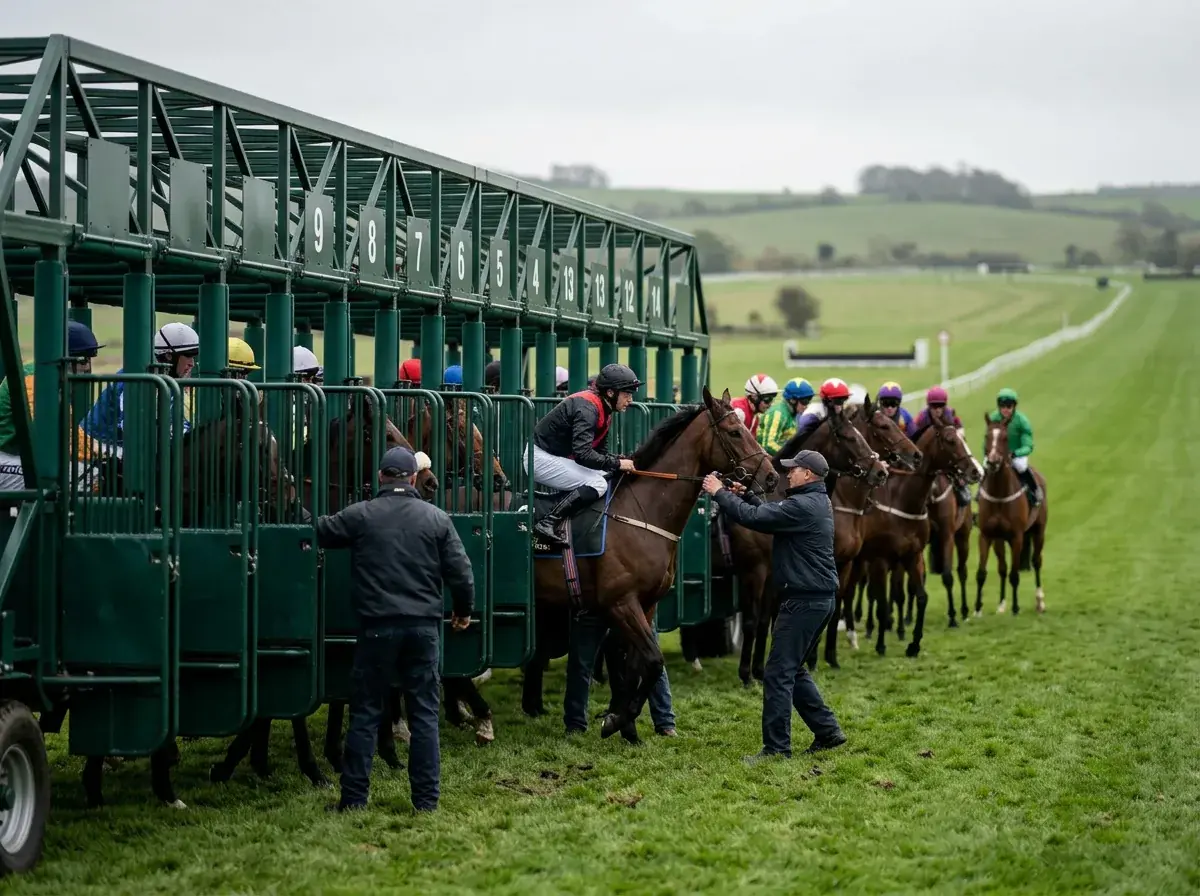
The race profile I actively look for is 12 to 18 runners on the Flat and 14 to 20 on the Jumps. Below 12, the field is too narrow for a perm to leave meaningful upside u2014 most plausible 1-2-3 combinations will be backed heavily by the public and the dividends will be modest. Above 20, the cost-of-coverage problem becomes acute u2014 you need a wider shortlist to capture the result, which pushes the perm cost into territory that most bankrolls can’t sustainably support.
The Grand National at 40 runners sits well outside the practical range for most boxing punters, which is why it’s a different beast structurally. The Cheltenham handicap chases at 22 to 28 runners are at the top end of the sweet spot, and the dividends those races produce reflect that field size genuinely justifies the broader perm shortlists they invite.
The shape of the market at the off
Beyond field size, the most important race-selection variable is the structure of the market. A 14-runner handicap with three horses priced 6/1 and shorter, and the rest at 16/1 and longer, is structurally different from a 14-runner handicap with one horse at 5/2 and the rest at 8/1+. Both have the same number of runners. They are not the same race for boxing purposes.
The race I look for is one where four to six horses are genuinely live contenders u2014 priced between 4/1 and 18/1 u2014 with no single horse dominating the top of the market. That price spread tells you the market hasn’t crystallised around one or two obvious winners, which is exactly the condition under which boxing four or five horses can produce a 1-2-3 result that the public didn’t anticipate.
Conversely, a 14-runner handicap with a 6/4 favourite is rarely a boxing race. The market is signalling high confidence in one horse, and even if that horse runs second or third, the dividend on the placed combinations involving the favourite will be modest. The structural pricing of the CST and the pool dynamics both compress dividends when a short-priced favourite is involved in the result.
Going, course and the structural variables that reshape form
The Dragonbet bookmaker quote from the 2026 Cheltenham Festival captures one of the most useful race-selection signals: “It’s funny how the betting ring ebbs and flows. For a long time all the sharp money used to be in the betting ring. It then disappeared but, with all the regulation online, the sharp money has really come back to the course and the bookies are forced to have an opinion.” When sharp on-course money is present and the official going looks set to deviate from horses’ usual ground preferences, that’s a race where the morning prices are likely to misprice some of the contenders.
Heavy ground in a long-distance handicap is one of the most reliable boxing setups. The going reshapes form lines, particularly favouring stayers over those who’ve shown class on faster ground. A shortlist of four horses on heavy ground u2014 the favourite, two proven mud-runners at 8/1 and 12/1, and a longshot stayer at 20/1 u2014 produces a perm with credible upside because the going filters out the horses that would otherwise dominate.
Course also matters. Some UK courses have distinct characteristics that reward specific horse types u2014 the tight Chester turns, the long Newmarket straights, the demanding Cheltenham hills. Horses with proven form at the course in question deserve weight beyond their generic form lines, and races where two or three such course specialists are present alongside the usual contenders are structurally good for boxing.
Where the calendar concentrates the best opportunities
The Cheltenham Festival contested handicaps u2014 the Ultima on Tuesday, the Coral Cup on Wednesday, the Pertemps Final on Thursday u2014 produce the most consistent boxing opportunities in the National Hunt calendar. Optimove tracked 68.8 million bets across UK operators during the four days of Cheltenham 2025, with every one of the 28 Festival races making the top 31 most bet-on races of the year. That casual money inflates pools to levels that small structural edges produce real cash returns.
Royal Ascot produces occasional outsized opportunities of a different kind. The Coventry Stakes 2024 result u2014 80/1, 40/1, 50/1 producing a £122,667.10 Tote Trifecta against a £83,273.26 CST u2014 is the calendar’s extreme example of public misalignment. Royal Ascot’s two-year-old races and longer handicaps are where the broadest fields and most heterogeneous form lines combine to produce results the SP-derived algorithms can’t value correctly.
Outside the Festivals, the contested midweek handicaps at Sandown, Newbury, Newmarket and Doncaster routinely produce 14 to 16-runner handicaps with the price structure that suits boxing. These races aren’t headline-grabbing but they generate the bulk of profitable boxing weeks across a calendar year. As Lee Phelps put it in pre-Cheltenham comments before 2026, “the battle between us and the punters over the four days of the Cheltenham Festival is unrivalled in Jumps racing” u2014 the Festival is where the spotlight is, but the midweek handicaps are where the working punter quietly accumulates value over the season.
The race-selection checklist I actually use
The questions I run through before any race becomes a candidate for a perm are concrete. Field size 12 or more on the Flat, 14 or more on the Jumps. Top of the market spread u2014 no single horse shorter than 7/2, ideally with four to six horses between 4/1 and 18/1. Going either consistent with how the contenders prefer to run or distinctly favouring a specific type within the shortlist. Course form for at least two of the genuine contenders. Recent runs showing genuine current form u2014 not horses returning from breaks longer than 90 days unless the trainer has a strong record with comebacks.
If a race ticks four of those five boxes, it’s worth a shortlisting exercise. If it ticks three or fewer, I usually move on u2014 the structural edge isn’t there to support the perm cost. The discipline is the same one that distinguishes professional boxing punters from casual: ruthless willingness to skip races, even big-name races, where the structural setup doesn’t support the bet shape.
The arithmetic of how this race-selection logic translates into bankroll deployment is the next layer of the decision tree. The bankroll-management guide for combination forecasts covers the staking structure that makes the race-selection effort actually pay out over time. Picking the right race without the right staking discipline produces volatile results; the two halves of the discipline need to work together.
Is field size more important than market shape for race selection?
They work together rather than competing. A 16-runner handicap with a 5/4 favourite is usually a poor boxing race because the market shape is wrong. A 12-runner handicap with five horses priced between 9/2 and 14/1 is often a good boxing race despite the smaller field. Market shape determines whether the field size you have is actually usable for a perm.
Do I need to skip whole meetings if the race profiles don’t fit?
Often yes. Some midweek cards at smaller fixtures don’t contain a single race that fits the profile for serious boxing. Skipping those days isn’t laziness u2014 it’s discipline. The boxing punter who only bets on the 30 to 40 best-shaped races per year produces dramatically better returns than the punter who tries to perm something on every Saturday card.
Published by the box bet in Horse Racing team.