Longshot Identification for the Trifecta: Finding the 16/1 Horse the Market Got Wrong
 Available in US
Table of Contents
The horse that turns a £24 outlay into a £1,100 collect
Every meaningful box trifecta dividend I’ve ever cashed had at least one longshot in the result. The 16/1, 22/1, 33/1 horses that the public dismissed but that the form, the going or the stable signal pointed to as genuine contenders. The skill that separates the boxing punter who consistently produces returns from the one who breaks even is not picking the favourite u2014 anyone can do that u2014 but identifying the longshot who genuinely deserves a place on the four-horse shortlist.
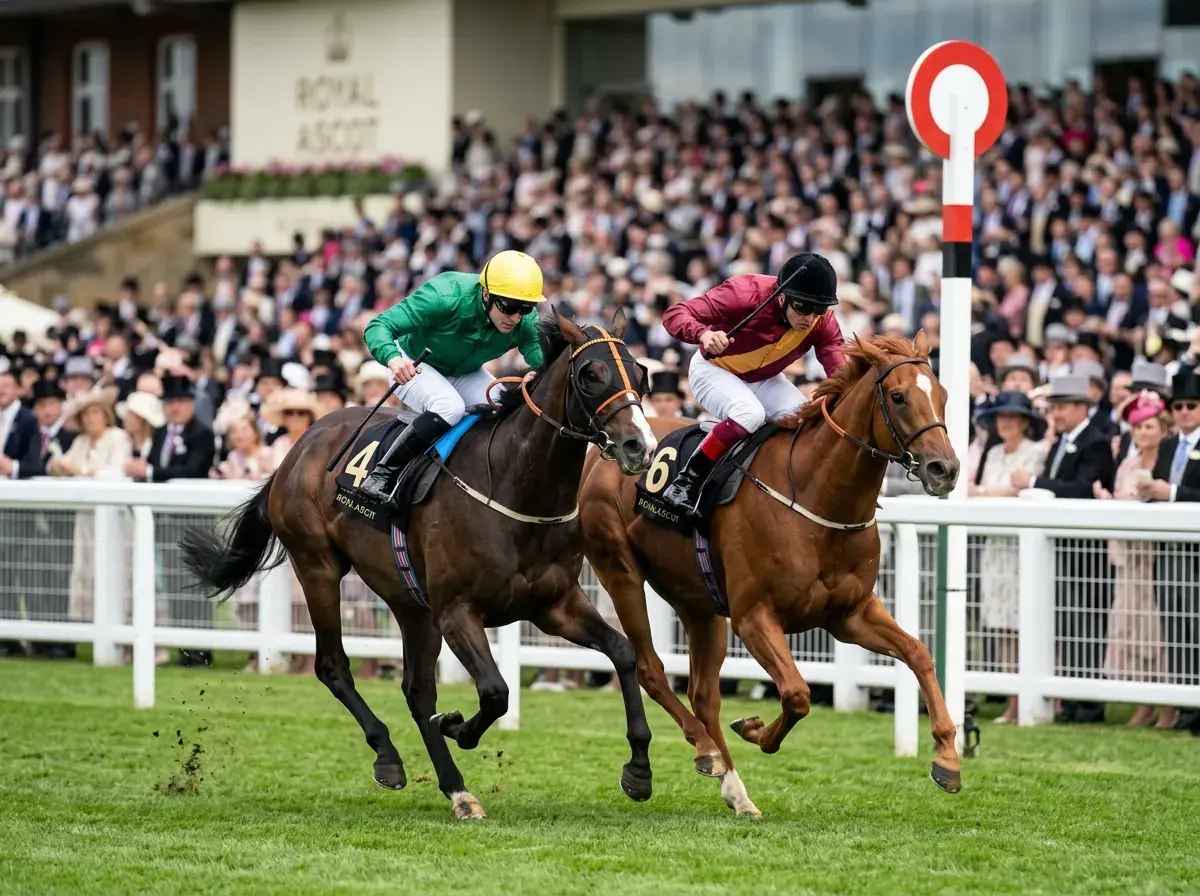
The Royal Ascot 2024 Coventry Stakes u2014 80/1, 40/1, 50/1 producing a £122,667 Tote Trifecta u2014 is the calendar’s extreme example. Three longshots. One historic dividend. The punters who’d identified even two of those three on a wider perm collected life-changing money. The structural lesson isn’t that you should try to back triple-longshot finishes every Saturday u2014 you’d lose your shirt within a month u2014 but that the longshot-identification skill is what turns boxing from a lottery into a strategy.
The three categories of longshot worth shortlisting
Not every long-priced horse is a structural longshot worth including in a perm. Most 16/1 and 25/1 horses in a contested handicap are priced that way because they’re genuinely outclassed or out-of-form. The horses worth identifying fall into three distinct categories, and each requires a different reading approach.
The first category is the going-mismatch longshot. A horse whose form on the prevailing going is excellent but whose recent runs have been on different ground. The form figures look weak because the recent runs were on unsuitable conditions; the form on the current going is two seasons old or buried in race archives. The market has priced the horse on recent figures rather than on conditions-matched form. These horses go off at 12/1 to 25/1 in races where they’re structurally the second or third most likely placed runner.
The second category is the stable-form longshot. A horse from a stable that’s quietly hit form over the past two weeks after a slow start to the season, where the market hasn’t yet caught up to the change in trainer cycle. The stable’s 14-day strike rate is double the long-term average. Specific horses being run after the form change are mispriced because the recent stable signal hasn’t fully filtered into bookmaker models. These horses sit in the 16/1 to 33/1 bracket in races where their underlying chances are 10/1 or shorter.
The third category is the recent-action longshot. A horse who’s had a single eye-catching effort in their most recent two or three runs u2014 staying on through beaten horses, finishing well after being held up, or showing notable form against a horse that subsequently won well. The race-comment signal is real, the public hasn’t priced it, and the form figures still reflect the broader pattern of unimpressive finishes. These horses go off at 18/1 to 40/1 in races where the eye-catching effort signals a genuine performance.
Reading the going-mismatch signal cleanly
The going-mismatch longshot is the most reliable of the three categories because the going data is unambiguous and the form archive can be checked precisely. The morning routine is to identify horses whose career-best efforts came on the prevailing ground and who haven’t run on similar conditions recently.
The structural signal is strongest on going-shift days u2014 races where the official going has changed from declaration to off-time. A handicap declared on “good” ground that’s run on “heavy” ground after overnight rain hasn’t had its full pricing adjustment yet. Horses with proven heavy-ground form are still priced at their pre-shift levels. The window of two to three hours after the going update is the structural opportunity.
BHA Q1 2025 punctuality data showed 87.6% of races starting within two minutes of the scheduled off, up from 72.7% in 2023. Tighter punctuality means the SP-forming process now reflects late market moves more accurately than it used to, which means the going-mismatch signal gets partially priced into the final SPs through sharp money in the final 15 minutes. The structural edge is now slightly smaller than it was three years ago, but it remains material.
The stable-form signal and its 14-day window
The stable-form longshot identification runs through the published trainer form data. The structural signal is the trainer’s strike rate over the past 14 days against their long-term average. A trainer hitting 28% strike rate over the past 14 days against a long-term 14% is signalling something u2014 either a quality cluster of recent entries, a yard returning to peak fitness after a quiet period, or a structural improvement in the stable’s working conditions.
The longshot finder uses this signal at the 25/1+ bracket specifically. A 25/1 horse from a stable hitting 28%+ over the past 14 days is structurally interesting in a way the SP alone doesn’t capture. Including such horses on the box trifecta’s longshot rung produces shortlists with genuine longshot upside backed by real recent signals.
The discipline is to apply the signal symmetrically. A trainer hitting 8% over the past 14 days against a long-term 16% is signalling the opposite u2014 below trend, and horses from that stable should be downweighted relative to their morning prices. The boxing punter who weights the cold stable signal up and the hot stable signal down produces sharper shortlists than one who only ever uses the hot signal.
The race-comment signal that most punters skim past
The third category u2014 the recent-action longshot u2014 requires reading race comments rather than just form figures. The comments published by The Racing Post and the operator card services on each horse’s recent runs contain the qualitative signals that the numeric form figures miss. A horse’s last finishing position might read as “5th of 12” with form figure 5, but the comment might read “stayed on well in last 200m after being held up, just denied 4th.”
That comment is the signal. The horse finished 5th but ran on through the line in a way that the form figure doesn’t capture. The race comment is the prose interpretation of the same race that the form figure summarises, and the prose carries more information than the figure.
The structural pattern is that horses with eye-catching comments on their last one to three runs are mispriced in races where their finishing positions look weak. A 33/1 horse with three “stayed on through beaten horses” comments in succession is signalling a horse with genuine form coming back to peak, with the market still pricing the historical finishing positions. Including such horses on the longshot rung of a four-horse box trifecta is exactly the discipline that turns the bet from a guess into a structured play.
Where the longshot horse fits in the four-horse box
The boxing punter’s discipline is to limit the perm to four horses with at most one or two from the longshot category. A four-horse box of two short-priced contenders and two longshots is a different bet from a four-horse box of four short-priced horses. The first version delivers upside through the longshot effect; the second is essentially a perm on the obvious top of the market with limited dividend potential.
The typical structure I work with is 4/1 favourite, 7/1 second favourite, 11/1 third contender, 25/1 longshot. Four horses, one strong shortlist driver (the longshot identified from going, stable form or race comments), and three short-to-medium-priced contenders that anchor the bet’s hit rate. The four-horse box at £1 unit costs £24 and produces 24 lines covering every ordering across positions 1, 2 and 3 of these four.
The Tote+ Trifecta structural advantage u2014 77% beat rate over the CST with average +50% value per bet u2014 amplifies the longshot effect. When the longshot fills the trifecta, the resulting dividend through Tote+ is typically substantially larger than the equivalent through the CST. The structural product choice locks in the +50% expected uplift across hundreds of trifecta bets across a season. The supporting logic for choosing the right race in the first place is in the race-selection guide, which is the gate that determines whether the longshot identification effort actually translates into a profitable perm.
What’s the lowest price I’d consider a longshot for trifecta purposes?
Roughly 14/1 to 16/1. Below 14/1 the horse is usually in the genuine contender bracket from the market’s perspective, and the structural mispricing opportunity is smaller. Above 33/1 the underlying probability is typically below the threshold that justifies inclusion in a four-horse shortlist, regardless of signals. The 14/1 to 33/1 bracket is where the longshot identification work most reliably pays off.
Do operators offer different longshot reading tools as part of their racing services?
Most UK operators publish recent trainer form tables, stable changes, and form-figures alongside their racecards. The Racing Post is the most detailed for race comments. The structural information is broadly the same across providers u2014 the differentiation is in how punters use it. The longshot-identification skill comes from reading the data systematically rather than from accessing exclusive information.
Prepared by the box bet in Horse Racing editorial staff.