Tricast vs Trifecta UK: Settling the 1-2-3 Exotic Markets
 Available in US
Dividend Discrepancies Between Tricast and Trifecta Products
Years ago I watched a punter at Doncaster celebrate a tricast that paid £640 on a quid, then mutter “wish I’d had it on the Tote” when the racecourse screens flashed up a Trifecta dividend of £1,217.50 from the same three horses. He’d backed both products in his head, neither on the slip. Same 1-2-3, two completely separate worlds of settlement.
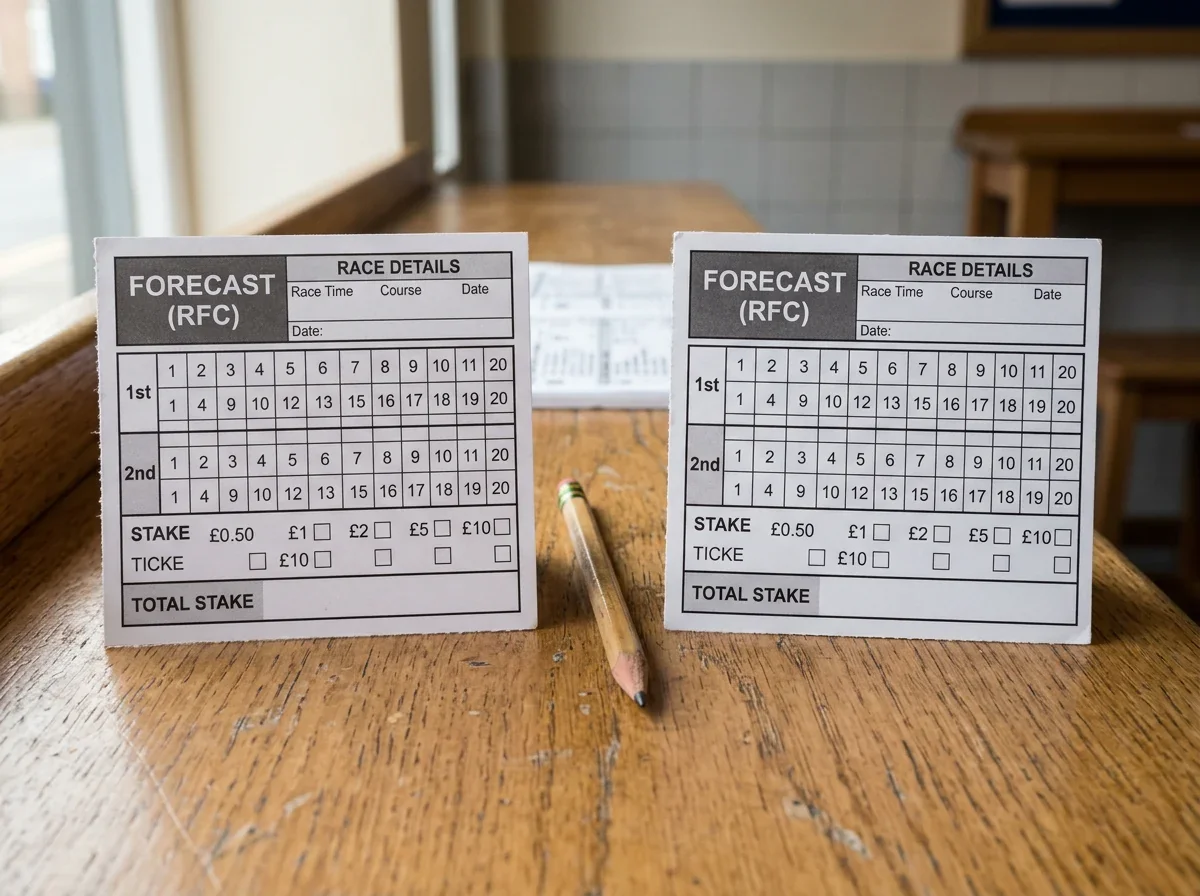
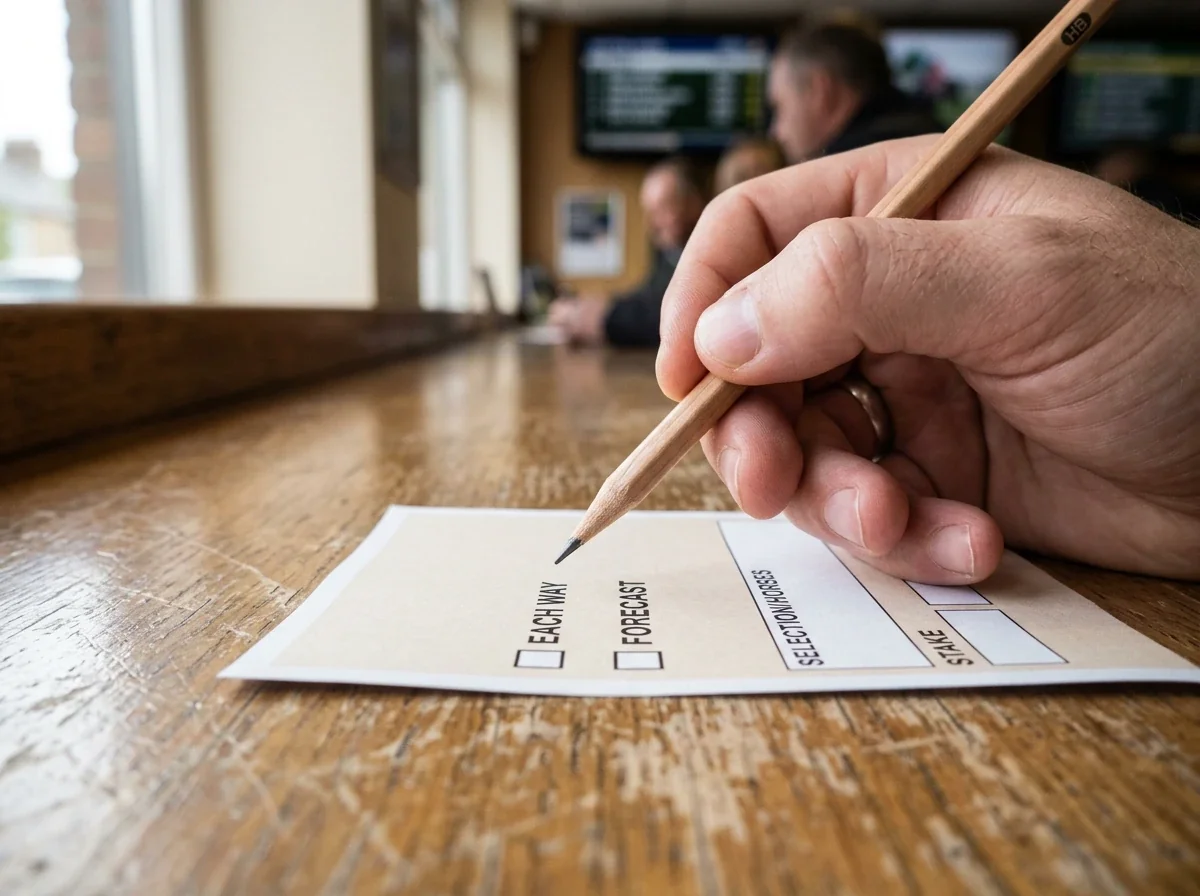
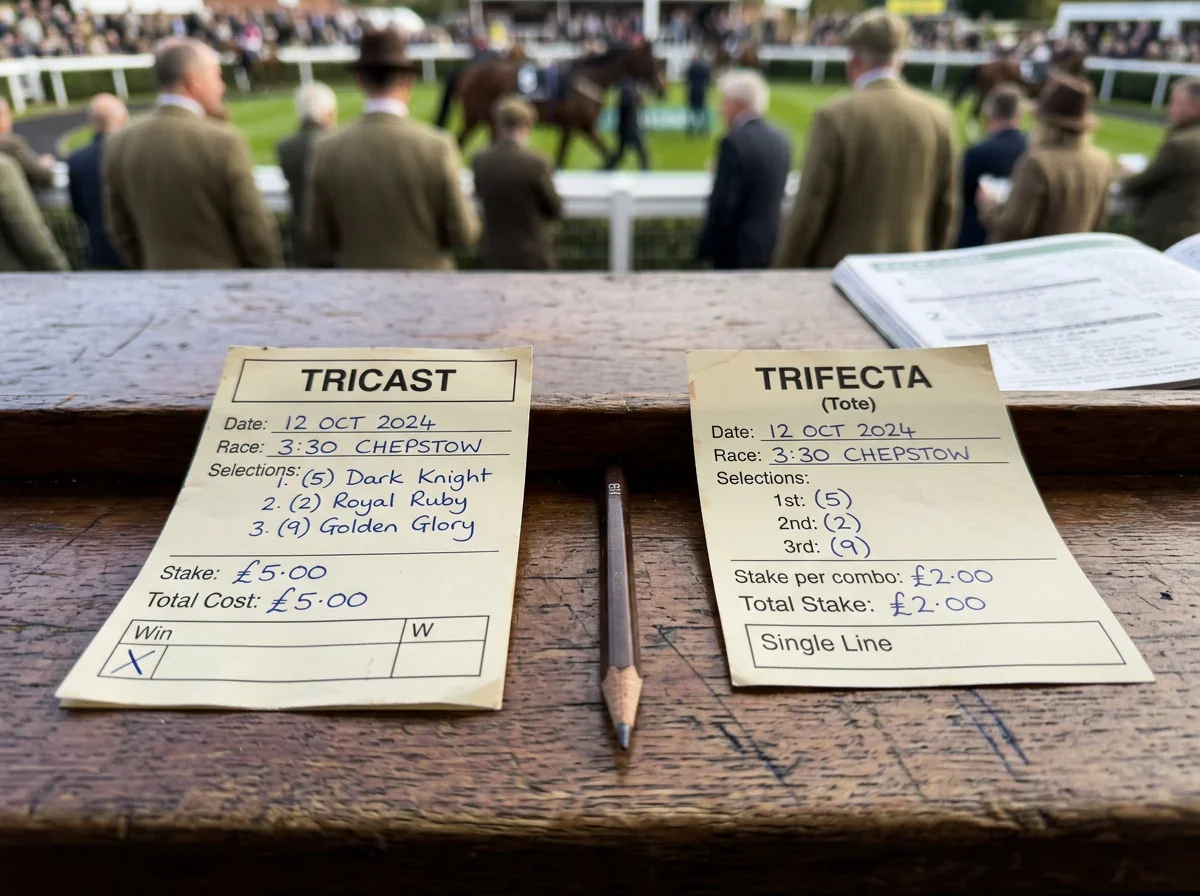
That moment is the whole point of this comparison. A Computer Straight Tricast and a Tote Trifecta look like the same bet to anyone glancing at a betting shop screen. They both ask you to pick the first three home, in order. Underneath, one is a fixed-odds algorithm and the other is a parimutuel pool. They almost never pay the same amount, and the gap is sometimes enormous.
The beauty of the box bet, as Dave Nevison once put it, is its mathematical simplicity – you don’t need to predict exact order, you just need to identify contenders. The trick is choosing which 1-2-3 product carries that simplicity for the best price on a given afternoon.
If you are confident in predicting the top four finishers, upgrading your slip to a superfecta box bet can yield massive payouts on competitive handicaps.
Computer Straight Tricast mechanics and the 8-runner rule
Most people who bet a tricast never look up the rule that governs whether the bet is even available. Then they spot a 7-runner Wolverhampton handicap, fill in the slip, and the operator strips the tricast line out at settlement. Confusion follows.
The UK tricast – properly the Computer Straight Tricast, or CST – is restricted to handicap races with eight or more declared runners. That’s it. No CST on Group races, no CST on conditions stakes, no CST on novices. Tricast bets in UK racing are tied to handicap fixtures with 8 or more declared runners by long-standing convention with the bookmaking industry. It keeps the algorithm useful in fields where the betting market is broad enough to derive meaningful prices from starting prices.
The way a CST settles is mechanical. After the race, every horse has a returned starting price. The CST formula takes those SPs and runs them through a deterministic algorithm that produces a single dividend per pound staked. There’s no pool, no takeout in the parimutuel sense – the bookmaker pays out whatever the formula returns. Two punters who both back the same 1-2-3 at the same office will be paid the identical dividend down to the penny.
This matters for boxing. A combination tricast on three horses settles as six possible CSTs (one for each ordering), and only the order that actually wins triggers a payout. The other five lines are written off. That’s where the cost formula n×(n-1)×(n-2) comes from. A £1 combination tricast on five horses produces 60 separate CST lines and costs £60 – but you only collect on the one line that matches the result.
Tote Trifecta mechanics – pool, takeout, dividend declaration
Pull up a Tote Trifecta result on Irish Racing or the Tote website and you’ll see something the CST never shows: the size of the pool. On a quiet Wednesday at Cheltenham earlier this year the Junior NH Flat Race produced a Trifecta dividend of £10,707.50 on a single £1 unit. That figure didn’t come from a formula. It came from the money other punters put in.
The Trifecta is a parimutuel pool. Every stake on the race goes into one fund. The Tote skims a takeout – the percentage retained for operating costs, prize fund contributions and so on – and the remainder is divided among the winning units. A “winning unit” is a £1 stake that picked the first three home in correct order. If five units win, each gets a fifth of the post-takeout pool. If half a unit wins, the dividend doubles.
Three implications follow. First, the dividend you’ll receive is unknown until the race finishes – you bet without knowing the price. Second, the pool size matters more than the SP – a 50/1 winner in a thin Wednesday pool can pay less than a 14/1 winner in a fat Cheltenham Saturday pool. Third, casual money inflates dividends. A field of first-time depositors backing favourites on Gold Cup Day leaves a fat pool for the few who picked the right longshots.
Boxing here works the same way mechanically. A combination Trifecta covering three horses produces six lines, each of which is a separate £1 entry into the pool. Five lines lose, one wins, the winning line collects the full unit dividend.
Numerical compare on the same 1-2-3
Take a hypothetical 10-runner Saturday handicap chase with three horses finishing in this order: a 5/1 favourite, an 8/1 second favourite, a 16/1 outsider. The CST formula will return a dividend close to what the SP-derived algorithm always returns for that price combination – call it £312 to £350 on a £1 stake, depending on the exact race conditions used by the algorithm.
Now imagine the same race produced a Trifecta pool of £180,000. Takeout removes around £45,000. With three winning units, the £135,000 remainder pays £45,000 per unit – a £45,000.00 dividend per pound. If thirty units won, the dividend is £4,500. If three hundred won, £450.
That’s the structural truth: CST dividends are predictable, Trifecta dividends are variable. On the same 1-2-3 you might find the Trifecta paying double the CST, or paying half of it. The big skews happen when the result confounds the public – and that’s where the boxing punter who reads field strength carefully has an edge over the punter who just picks favourites.
When tricast is simply not available
One of the most common slip mistakes I see at the racecourse is punters writing “tricast” on a Group 1. The cashier crosses it out. The bet goes down as a tricast attempt with the line voided. Most operators will refund the line stake; some will quietly settle as a forecast on the top two, depending on house rules. Always worth checking.
The races where CST is unavailable include every non-handicap, every race with fewer than eight declared runners, every virtual race, and most international fixtures shown by UK operators. On all of those, the only 1-2-3 product available is the Tote Trifecta. Premier Flat meetings averaged 11.02 runners per race in BHA’s Q3 2025 reporting period, Premier Jumps 9.41, Core Flat 8.54 – meaning Core Flat sits right on the edge of the CST cutoff in a typical race, and a couple of non-runners can knock it out entirely.
Several other product wrinkles affect the choice. A field that declares twelve runners but loses four to morning withdrawals can drop below the eight-runner threshold, and the CST goes with it. The pool Trifecta keeps trading regardless of how many horses leave the card. For the boxing punter who’s already filled in a slip, the Trifecta is the more reliable settlement product on race day.
This is also why some serious punters split outlay across both – fixed-odds on the CST when it’s available for the predictability, and pool money on the Trifecta to catch the upside when the pool dynamics favour you. The decision tree I work through before any boxing exercise is in this comparison of CSF and Tote Exacta pricing, which carries identical logic up to the tricast/trifecta level.
Explore our full range of exotic betting strategies at Permline.
What the two products mean for the punter at the slip
The practical answer for most readers is straightforward. If a race qualifies for the CST and you have a strong view that the favourites are vulnerable, the Trifecta usually pays better because casual money concentrates on shorter prices. If a race qualifies for the CST and your selections are short-priced, the CST will normally outperform the Trifecta because the SP-derived formula treats short prices generously and the pool dilutes them.
If the race doesn’t qualify for the CST, the question doesn’t arise. You’re in the Trifecta or you’re not betting the 1-2-3 at all. And if you genuinely can’t decide, splitting a £6 outlay into a £1 combination tricast (six lines at £1 each is £6 – but a combination tricast on three horses is six CST lines) alongside a £1 combination Trifecta covers both products for £12 total, with the upside that one of the two will likely outperform the alternative on settlement.
The same 1-2-3 won’t pay the same amount through both products on more than a handful of races a year. The job before the off is reading which product the result is most likely to suit. That’s a race-selection question, not a product question, and it’s why I keep coming back to the field-size and favourite-strike-rate data when I’m deciding which 1-2-3 to back.
Why can’t I place a tricast on a Group 1 race?
The Computer Straight Tricast in UK racing is restricted to handicap races with eight or more declared runners. Group 1s are condition races, not handicaps, so they fall outside the product. The Tote Trifecta is the only 1-2-3 product available on a Group 1.
Does a £1 trifecta box always cost the same as a £1 tricast box?
Yes – both products use the same n×(n-1)×(n-2) formula for the number of permutations. Three horses produce six lines, four produce 24, five produce 60. The £1 stake covers identical line counts on both. Differences arise only at settlement, not at staking.
Is a trifecta ever lower-paying than a tricast on the same finishers?
Often, especially when the result features short-priced favourites and the Tote pool was heavy with casual money on the same horses. The CST formula treats short-priced combinations generously by design, whereas a small post-takeout pool divided among many winning units depresses the Trifecta dividend below the CST.
Written by the editors at box bet in Horse Racing.