CSF vs Tote Exacta in the UK: Comparing Pool Payouts
 Available in US
Table of Contents
- Pricing Gaps Between CSF and Tote Exacta Pools
- How the CSF actually works — the starting-price formula nobody quite explains
- How the Tote Exacta actually works — the pool that pays what’s left
- Royal Ascot 2024 Coventry Stakes — what the numbers actually showed
- When the CSF systematically beats the Tote
- When the Tote pool runs away with it
- Tote+ — the overlay that complicates the choice
- The product you choose is part of the bet, not separate from it
Pricing Gaps Between CSF and Tote Exacta Pools
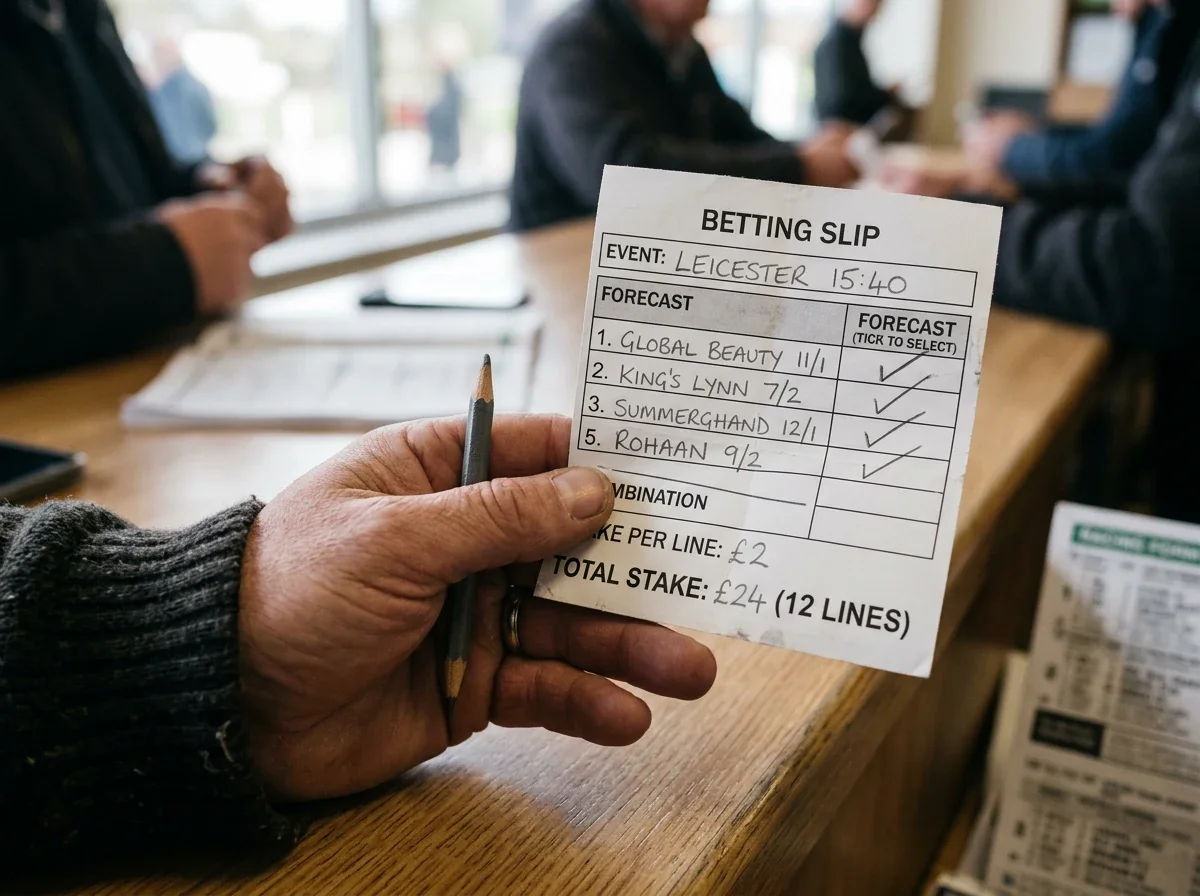
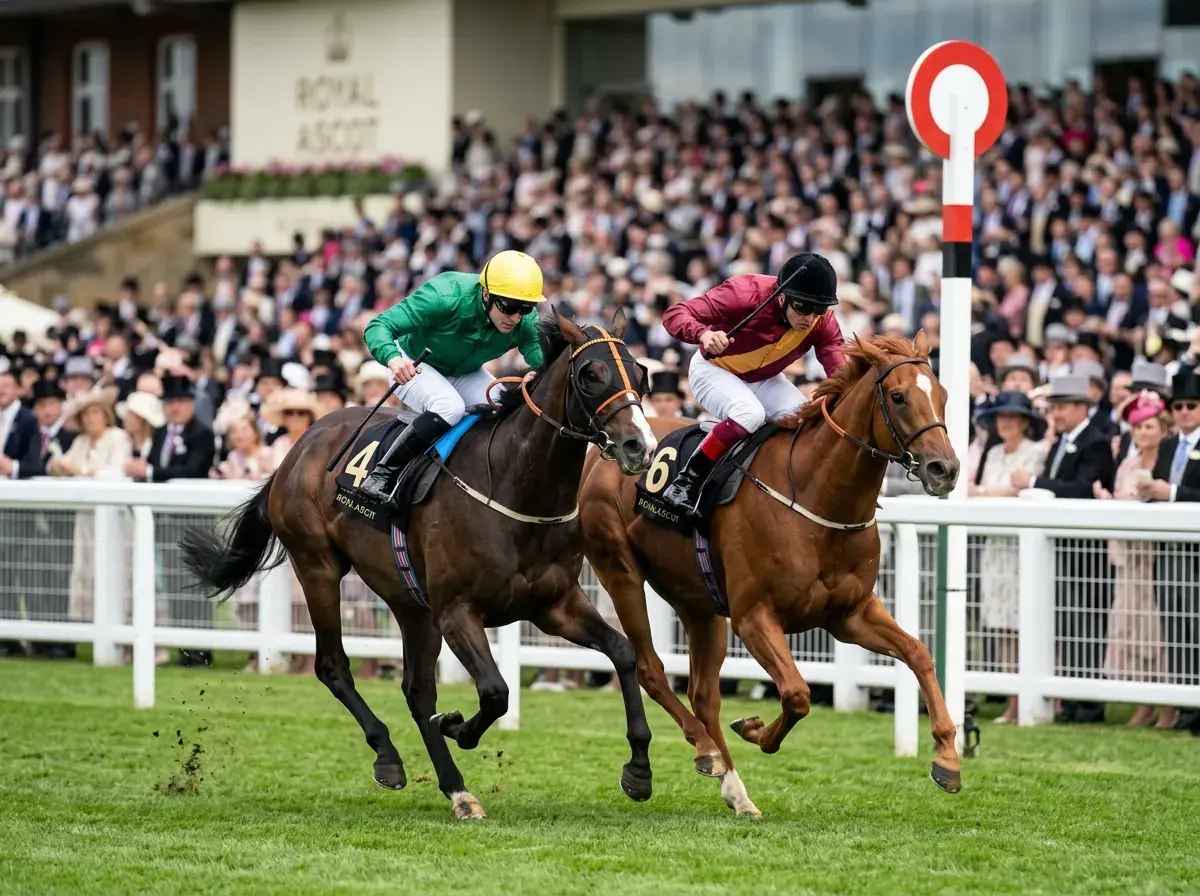
Royal Ascot, June 2024, the Coventry Stakes. Three horses crossed the line — an 80/1 winner, a 40/1 runner-up, and a 50/1 third. The CSF Tricast on that 1-2-3 declared £83,273.26 per £1 stake. Eye-watering. The Tote Trifecta on the same finishers declared £122,667.10 per £1 — forty-seven per cent more. Same race, same horses, same finish, two completely different dividends. The Trifecta figure is the UK record for the bet on this race. Both numbers were correct. They were just generated by two completely different machines.
That gap — forty-seven per cent on a four-figure dividend — is not a one-off oddity. It is what happens when long-priced winners meet two different pricing systems. The Computer Straight Forecast and the Tote Exacta are the two principal ways the UK industry settles a forecast bet, and they price the same finish from fundamentally different starting points: one derives a dividend from starting prices on a formula, the other distributes an actual pool of money among the winning ticket-holders. They drift toward different answers on different races, and the punter who understands which is which can pick the higher-paying product before the off, not after it.
So in this piece I’m going to walk you through both mechanics — how the CSF actually computes a dividend, how the Tote pool actually distributes one — and then show you the systematic patterns of when each pays more. There’s a real case to anchor the theory, the Tote+ overlay that complicates the picture, and a decision tree you can apply before placing the slip. Dave Nevison’s line about the box bet being mathematically simple — “identify contenders, don’t predict order” — applies to both products. Where they diverge is in how the order, once known, gets converted into a dividend, and that’s where the money lives.
To maximize your pool payouts, you should always take advantage of promotions like the Tote Plus guarantee which ensures you get the best possible dividend.
How the CSF actually works — the starting-price formula nobody quite explains
The first time I tried to find a written explanation of the CSF formula in plain English, I gave up after a morning of digging. The Tote publishes its rules. The bookmakers publish their settlement terms. The industry never quite publishes the formula itself in a form a normal punter can follow. So I will give you the working summary I’ve assembled across twelve years of cross-checking real dividends against the inputs.
The Computer Straight Forecast is a fixed-odds dividend derived from a formula. It is not a pool. It is calculated, retrospectively, from the starting prices of every horse in the race, with the result expressed as a return per £1 stake on the specific 1-2 combination that actually filled the top two slots.
The formula itself is proprietary to the SIS-administered industry settlement system, but the inputs are public: the SPs of the winner, runner-up, and the field as a whole. The mechanics behave roughly like this. The CSF assigns a weighting that rewards combinations where at least one of the top two was a longer-priced horse, and that penalises combinations where both horses were short-priced favourites. A 7/2 horse beating a 5/1 horse will produce a modest CSF — somewhere in the £25 to £45 range per £1 — because both were prominent in the market. A 16/1 horse beating a 7/2 horse will produce a much larger CSF — easily £100 to £200 per £1 — because the longer price drives the formula upward.
The key property is that the CSF is calculated, not distributed. There is no pool to divide. Whatever the formula spits out, the bookmaker pays. That has two consequences. First, the CSF dividend is fixed by SP — you know what the bet pays the moment the SPs are confirmed, regardless of how many other punters held the same ticket. Second, the bookmaker is on the hook for the full computed dividend, which is why bookmakers can occasionally face large CSF liabilities on a single race when an unfancied horse beats a fancied one.
The CSF is settled centrally. Every UK bookmaker that takes a forecast bet pays the same CSF dividend on the same finishing order, because the dividend is industry-declared, not bookmaker-set. If you ask a Ladbrokes shop, a Bet365 app, and a William Hill counter to settle the same 1-2 on the same race, all three return the same number. That uniformity is one of the more elegant properties of the UK forecast market: shop around for promotions and free bets all you like, but you cannot shop around for a better CSF.
The full computational walkthrough, with worked SPs from a real handicap, sits in the standalone piece on the CSF formula. For our purposes here, the takeaway is structural: the CSF is a calculated number, fixed by the SP formula, paid uniformly by every UK bookmaker, and entirely independent of how many other punters backed the same combination.
How the Tote Exacta actually works — the pool that pays what’s left
Walk into a Tote terminal at Newbury on a Saturday and the screen tells you only one thing about the Tote Exacta: the current pool size on the next race. Not the dividend you might win. Not the take-out percentage. Just a running number that climbs every time another punter places a stake. That single piece of information is more honest than anything on a fixed-odds slip, because it tells you the truth about pool-betting: the dividend doesn’t exist yet, and won’t until the race is over.
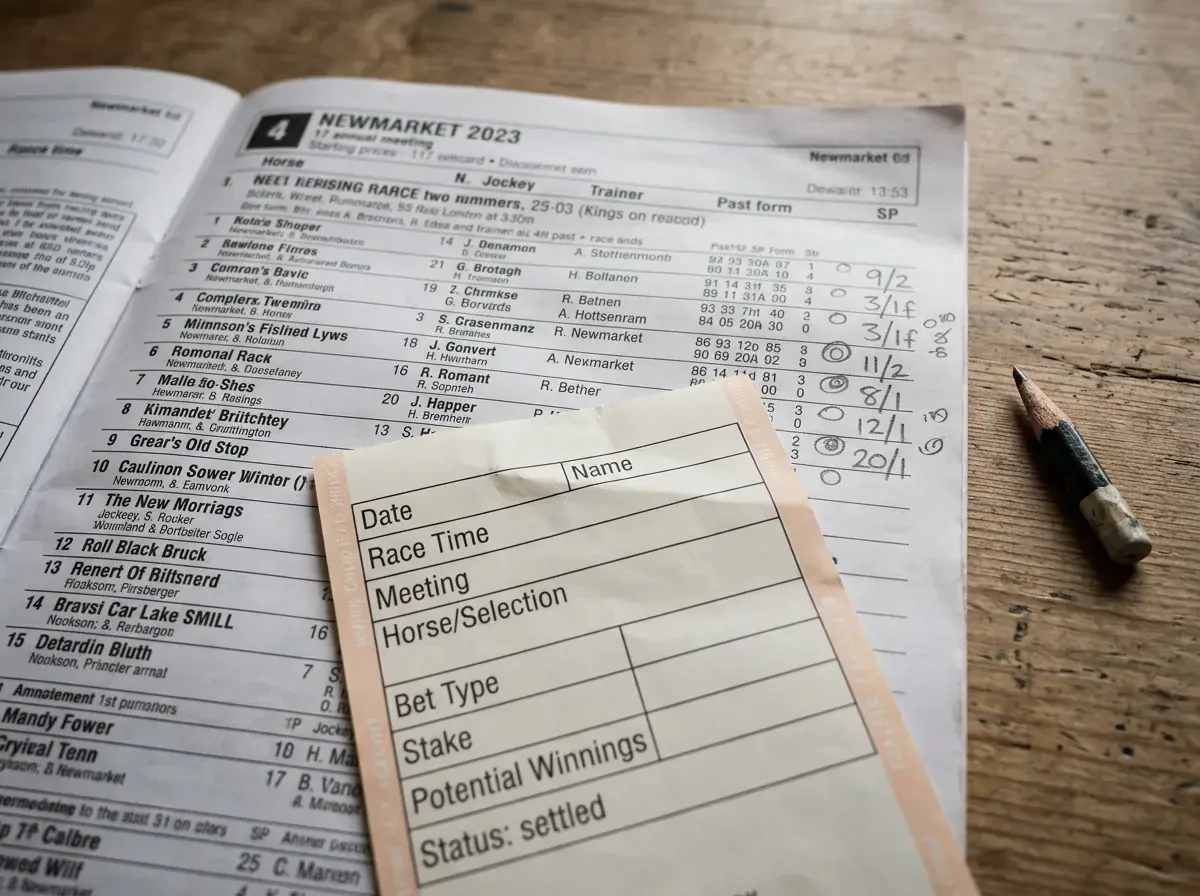
The Tote Exacta is a pari-mutuel bet. The mechanics are entirely different from the CSF, and so is the philosophy. Every Tote Exacta stake on a given race goes into a single pool. The pool is held by the Tote — the UK’s centralised pool-betting operator — and is settled by dividing what’s left after takeout among the holders of winning tickets.
The pool starts at zero and grows with every Tote Exacta stake placed on the race. By the off, the pool has whatever the betting public have collectively wagered on Tote Exactas in that race, plus any reserves carried over from rolled-over pools on previous days. The Tote then takes a fixed percentage as takeout — historically in the high teens for pool bets, varying slightly by product — and the remaining sum is divided among the punters who correctly named the 1-2 finishing order on the winning ticket.
Three properties fall out of this structure. First, the Tote Exacta dividend is not known until the race is run and the pool is closed. The number on the docket is purely a projection based on current pool size at the time of placement; the final declared dividend will move with late stakes and with how many winning tickets share the pool. Second, the dividend can swing wildly between races. A heavily-bet race on a Premier Flat meeting can produce a large pool and modest dividends as many tickets share it; a thinly-bet midweek card can produce a small pool with one or two winning tickets that scoop everything. Third, the dividend rewards the punter who holds an unusual ticket — the combination nobody else backed — in a way the CSF formula cannot.
The Tote Exacta also displays “breakage” — small rounding that benefits the operator on each declared dividend, typically to the nearest 10p — and a takeout percentage that effectively reduces the punter’s return. Betting Emporium’s analysis of Tote+ Exacta performance suggests the headline Tote dividend beats the CSF in 77% of races on which both are available, with average value per bet of +21% — those numbers tell you the long-run skew, and they tell you why pool betting on Exactas has retained its appeal even with online fixed-odds dominating high-street volume.
The headline difference between the products is straightforward. The CSF pays what the formula computes. The Tote Exacta pays what the pool leaves. The two converge on average and diverge by race, and the divergence is where every interesting strategic question lives.
Royal Ascot 2024 Coventry Stakes — what the numbers actually showed
Back to that Coventry. The race was a six-furlong Group 3 for two-year-olds, fourteen runners declared. The winner went off at 80/1 — the longest-priced juvenile to land the race in decades. Second was 40/1, third was 50/1. By any measure a result that punished the market and produced exotic-bet dividends to match.
The CSF on the 80/1 to 40/1 combination is large by formula but constrained by the maths. The starting-price weighting produces a dividend that depends on the spread of prices across the field; with the favourites going well below SP and the longest prices contributing the most, the computed CSF lands at a high number — large, but a number, fixed. The CSF Tricast on the same 1-2-3 — a Computer Straight Tricast, the three-horse version of the same formula — declared £83,273.26 per £1.
The Tote Trifecta on the same 1-2-3 declared £122,667.10. The difference — 47% higher than the CST — is not a quirk. It is what happens when an unusual combination wins. Almost nobody backed 80/1 to win, fewer still combined that horse with 40/1 second and 50/1 third on a single Tote Trifecta ticket. The pool, swollen by Royal Ascot’s Festival volumes, had only a handful of winning tickets to divide between. The CST formula declared its number regardless of who held tickets; the Tote pool concentrated its number on a tiny ticket-holder base.
This is the structural property the punter needs to internalise. On long-priced winners, particularly in races where the pool is large and the ticket base is small, the Tote will reward the unusual combination disproportionately. The CSF will reward the same combination meaningfully — the formula is built to reward outsiders — but it will not reward it as steeply as the pool will. The 47% gap on Royal Ascot 2024 Coventry is at the extreme end of the distribution, but the directional pattern shows up in race after race when long-priced horses fill the top slots.
Was the 47% gap a one-off? Not entirely. The Grand National 2025 produced the inverse — the CSF Tricast actually exceeded the Tote Trifecta on the same 1-2-3, the first time in several years that reversal had happened on the Aintree showpiece. The reverse happens in roughly one in five races where both products are available. That tells you the Tote pays more on average — the 77% figure cited by Betting Emporium is consistent with this — but it does not pay more in every race. The patterns are systematic enough to predict; they are not deterministic.
When the CSF systematically beats the Tote
Short-priced favourites in one-two finishes. That is the headline rule, and it has held up consistently across the seasons I’ve tracked. When the market top two go in as expected — a 5/2 favourite beats a 4/1 second favourite, say — the CSF formula produces a modest but predictable dividend. The Tote Exacta on the same finish, on the other hand, has been backed heavily by the market; the pool has many winning tickets to share between, and each ticket’s share is correspondingly thin.
The arithmetic is intuitive once you see it. The CSF formula is indifferent to how many other punters backed the same combination — it pays the same number regardless. The Tote pool is exquisitely sensitive to ticket-holder count — every additional winning ticket dilutes the dividend on every other winning ticket. Short-priced favourites have the most winning tickets on them. Long-priced surprises have the fewest. The two products therefore diverge along the price-spread axis: CSF wins on short-priced finishes, Tote wins on long-priced finishes.
This generalises beyond favourites. Any combination heavily backed by the betting public — a popular each-way pick, a sentimental favourite, a high-profile trainer/jockey pairing — will dilute the Tote dividend relative to the CSF. The Cheltenham Festival is full of these dynamics. Willie Mullins-trained horses, Constitution Hill at his peak, the high-profile yards that command public money — all produce Tote dividends that systematically underpay relative to the CSF on the days they win.
The practical implication is that for a forecast or tricast on heavily backed favourites, the CSF route is usually the higher-paying choice. If you are placing a slip on the 7/2 favourite to beat the 9/2 second favourite, you should be on a fixed-odds combination forecast, not a Tote Exacta. The mathematics works in your favour because you are betting against the crowd’s identical bet on the Tote side, and the formula is indifferent to the crowd on the CSF side. The difference can be 10% to 25% per bet on routine favourite-heavy results, and over a season those margins compound.
When the Tote pool runs away with it
The flip side is just as systematic. When a long-priced horse wins, or when two long-priced horses fill the top two, the Tote Exacta routinely produces dividends two or three times larger than the CSF on the same finishing order. The mechanism, again, is ticket-holder concentration. Fewer punters backed the unusual combination; the pool, whatever its size, gets concentrated on a tiny number of winning tickets; each ticket-holder’s share is correspondingly large.
The Festival arithmetic amplifies this. Cheltenham 2025 saw Tote Trifecta pools running into the hundreds of thousands of pounds across the four days, with one Junior National Hunt Flat race producing a Tote Trifecta of £10,707.50 per £1 stake. Optimove Insights logged 68.8 million individual bets across the four-day Festival, with daily active players up 178% to 189% on baseline. The pools were enormous because the public engagement was enormous; the dividends on unfancied combinations were enormous because the public’s tickets concentrated on the fancied ones.
Big handicaps on Premier days are the most reliable place to see the Tote pull away. Twenty-runner Grand National. Twenty-eight-runner Stewards’ Cup. Twenty-runner Cesarewitch. Fields large enough that the top two or three slots are genuinely up for grabs, with several plausible mid-priced winners, produce Tote pools where the actual 1-2-3 is rarely heavily backed. Dividends balloon. CSF dividends grow too, but the formula has a ceiling — it pays the SP-derived number — whereas the Tote pool has no ceiling, only the cap of “how much money was in the pool and how few people held the winning tickets”.
The rule for the punter: if you believe a long-priced contender can land in the top two, the Tote Exacta is structurally the higher-paying route. If you believe a long-priced contender can land in the top three, the Tote Trifecta wins more often than the CST on the same 1-2-3. The exception is the rare reverse case — the 20% of races where the CSF beats the Tote — which tends to cluster around short-priced winners that nonetheless produced unusual second or third places.
Build your betting strategy with data-driven advice from the leading British horse racing portal.
Tote+ — the overlay that complicates the choice
Tote+ is the operator’s enhancement layer on top of the standard Tote products. The structural promise is straightforward: if the standard Tote dividend on the winning ticket would have been less than the CSF or CST equivalent, Tote+ pays out a top-up to bring the dividend at least as high as the fixed-odds figure. If the standard Tote dividend was already higher, Tote+ adds nothing — the higher figure stands.
The effect is to put a floor under the Tote product. You can never lose value relative to the CSF by going through Tote+; you can only win value, either by collecting the standard pool dividend if it’s higher, or by collecting the topped-up CSF-matching dividend if it’s lower. Betting Emporium’s analysis suggests Tote+ Exacta beats CSF in 77% of races with average +21% value per bet, and Tote+ Trifecta beats CST in 77% of races with average +50% value per bet. Those are headline-grabbing figures but they reflect a structural overlay, not a market anomaly.
The catch — and there is always a catch — is that Tote+ availability is not universal. Some races are excluded; the product is not offered on every handicap or every Festival race; minimum stakes and channels vary. The punter has to check the product is live on the slip they are placing, not assume it. The shop docket and the app will indicate “Tote+ eligible” or similar, and the absence of that indication means you are on standard Tote Exacta with no floor.
For a structural deep-dive into how the Tote+ guarantee is funded, what the bookmaker margin looks like on the overlay, and which races systematically qualify, the dedicated piece on how the Tote+ guarantee actually works walks through the operator side. For our decision framework, Tote+ is the smart default when it’s available — it dominates the standard Tote product on long-priced winners and matches the CSF on short-priced finishes, capturing the upside of both.
A decision tree for the slip before the off
Here is the working sequence I apply at the rails or on the app before placing a forecast or tricast. It takes about ten seconds once you’ve internalised it, and it reliably routes you toward the higher-paying product more often than guessing does.
First, ask: are my selected horses short-priced favourites or longer-priced contenders? If both selections are 4/1 or shorter, lean CSF — the formula will pay more than the Tote pool because the pool will be diluted by many winning tickets on the favoured pair. If one or both selections are 8/1 or longer, lean Tote — the pool will reward unusual combinations.
Second, ask: how big is the Tote pool for this race? Festival days and Premier meetings produce large pools; Tuesday afternoon Wolverhampton produces small pools. A larger pool with a long-priced winner is the Tote’s sweet spot. A small pool produces erratic dividends — sometimes massive, sometimes thin — and adds variance you may not want on a meaningful stake.
Third, ask: is Tote+ live on the slip? If yes, it dominates the standard Tote choice in all scenarios — you keep the upside of the pool on long-priced winners and you get a CSF floor on short-priced finishes. If no, you are choosing between standard Tote and CSF on their merits race by race.
Fourth, ask: is there a known volume distortion? Major Festival favourites — a Mullins banker, a Gosden-trained Group 1 short-pricer — will skew the Tote ticket distribution toward the favoured combinations. Tote dividends on those races will underperform their typical pattern. The CSF formula doesn’t care about ticket distribution; it pays the same number regardless. On Festival favourites, CSF tends to win even when the prices look long enough to justify the Tote route.
The discipline is to make this decision before the off, not after. The pull to check the result and then mentally reconstruct which product would have paid more is a useless exercise — you can’t bet retroactively. The exercise that matters is forecasting which product will pay more given the shape of the race in front of you, and then placing the slip accordingly. Get this right two times in three across a season and you are materially ahead of punters who default to either product on autopilot.
The product you choose is part of the bet, not separate from it
Here’s the question I ask anyone who tells me they don’t bother thinking about CSF versus Tote — they just take whichever the bookmaker offers. Imagine you stood at the rails and were told “the same bet costs the same money, but pays one of two different dividends depending on a switch I flick here”. Would you pay attention to the switch? Of course you would. That switch is the product choice on every forecast you place.
The CSF and the Tote Exacta look like they sell the same thing: a prediction of two horses to finish 1-2 in any order, settled at a publicly declared dividend. They do not. They sell that prediction priced through two completely different pricing mechanisms, and over the course of a season the choice of mechanism is a substantial component of the punter’s edge.
The structural pattern is consistent enough to operationalise. Short-priced favourites — CSF wins. Long-priced surprises — Tote wins, often by a wide margin. Festival pools with concentrated public money — CSF wins on favourites, Tote wins on outsiders. Tote+ when available — dominates both standalone choices. Race-by-race deviations exist; the 20% inverse pattern at Aintree 2025 shows the CSF can beat the Tote on the right Grand National finish. But the long-run skew, supported by the 77% Tote+ outperformance figure and the typical handicap dividend patterns, is firmly toward the Tote product on unusual combinations and toward the CSF on expected ones.
Treat the product as a choice variable, not a default. The slip on your desk is two decisions, not one: the selections you back, and the settlement vehicle through which you back them. Get both right and the dividend takes care of itself.
No. Both settle on the first two finishers in a given order, but the CSF is a fixed-odds dividend computed from the starting prices of all runners via the industry formula, while the Tote Exacta is a pari-mutuel pool bet where the dividend is determined by the size of the pool and the number of winning tickets. On the same 1-2 finish, the two dividends will be different — sometimes meaningfully different — and which pays more is systematic with the price-spread of the result. Betting Emporium analysis of Tote+ performance data suggests Tote+ Exacta exceeds CSF in approximately 77% of races, with average value per bet of +21%. On Tote+ Trifecta versus CST, the same data shows 77% outperformance with average +50% value per bet. The Tote products win more often on long-priced winners and mid-priced upsets; the CSF wins more often on short-priced favourites and heavily-backed combinations. Tote+ is the operator’s enhancement that guarantees a minimum dividend equal to the CSF or CST equivalent on eligible races. If the standard Tote pool dividend would have paid less than the CSF, Tote+ tops up to match the CSF; if the standard Tote pool dividend would have paid more, the higher figure stands. Tote+ therefore beats or matches the CSF on every eligible race, but availability is race-specific, and you need to confirm Tote+ is live on the slip you are placing rather than assuming it applies. The Royal Ascot 2024 Coventry Stakes produced an unusual 1-2-3 — 80/1, 40/1, 50/1 — and the Tote Trifecta pool, swollen by Festival volumes, had only a small number of winning tickets to distribute among. Few punters backed that combination, so the pool concentrated on those few tickets, producing a £122,667.10 dividend per £1 stake. The CST formula, by contrast, computed a fixed dividend of £83,273.26 from the SPs regardless of how many punters held the winning ticket. The gap reflects the structural difference between pool-distributed and formula-computed pricing on long-priced unusual finishes.Is the Tote Exacta the same bet as a CSF?
How often does the Tote Exacta beat the CSF on the same finishing order?
What is ‘Tote+’ and does it always beat the CSF?
Why was the Coventry Stakes Tote Trifecta 47% higher than the CSF Tricast?
Prepared by the box bet in Horse Racing editorial staff.