
Placepot vs Box Bet: Comparing Pool and Forecast Returns
 Available in US
Operational Differences Between Placepots and Box Bets
A regular at my old local would always start a Saturday with a Placepot perm and finish it with a combination tricast on the feature handicap. He’d tell anyone who’d listen that they were “the same kind of bet, different races.” He was both right and wrong. They are both pool products on UK racing. They cover different things, work to different mechanics, and reward different kinds of punter judgement.
The Cheltenham Festival of 2025 ran what HBLB’s Alan Delmonte described in the Annual Report as featuring “particularly bookmaker-friendly results” – and yet on a single Saturday in November of the same year, Cheltenham produced a Placepot pool of £436,058 paying £225.90 to a £1 stake. That kind of dividend, on a six-race accumulator of place finishes, isn’t something a combination forecast on the feature handicap could produce on the same afternoon. The two products live in different financial universes for the punter.
How the Placepot actually works
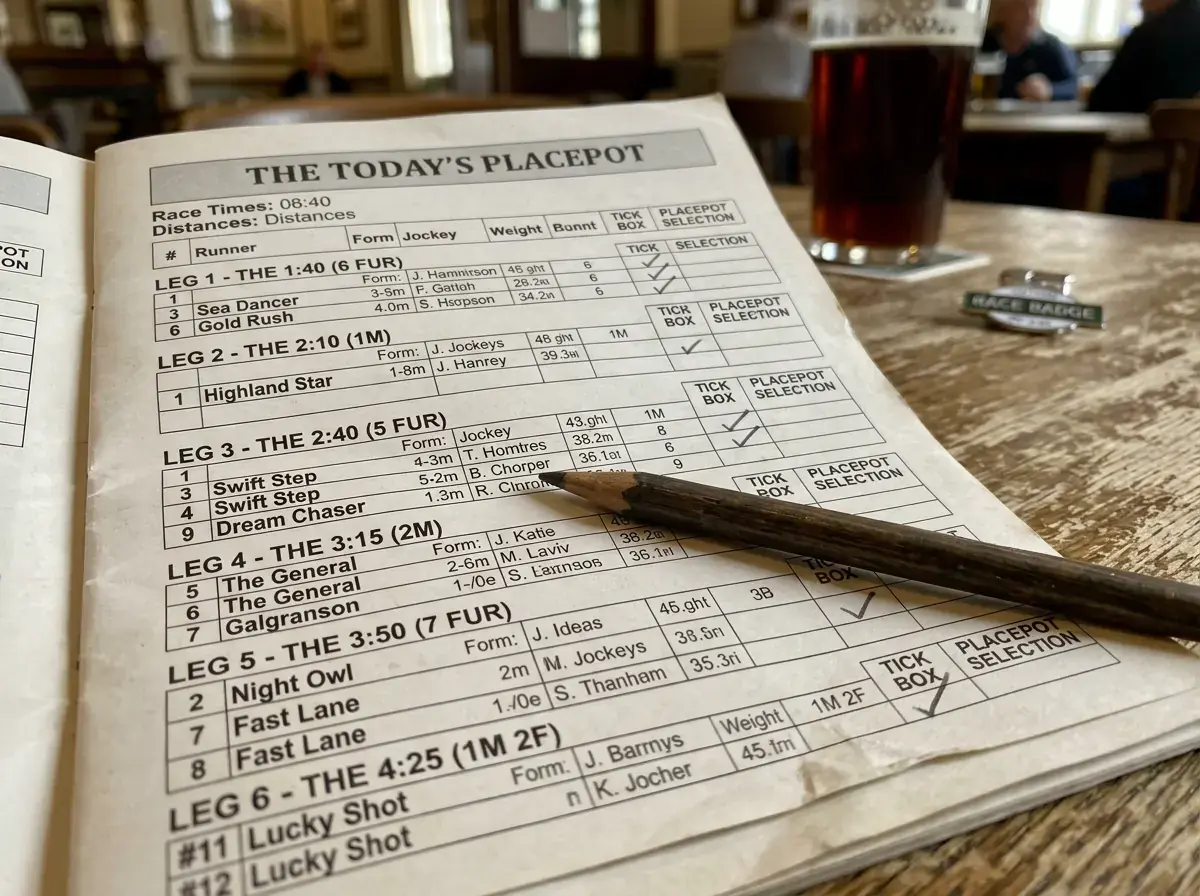
The Placepot is a six-race accumulator. The punter picks one or more horses to finish placed in each of the first six races on a chosen meeting. “Placed” means a top-three finish in races of 8 or more runners, top-two in races of 5-7 runners, and the winner only in races of 4 or fewer runners. The bet wins only if every selection in every leg places. The pool is shared among all winning units.
Where the mechanic becomes interesting is the perm. A punter who picks one horse per race has a single line, costing £1 (or whatever unit stake they choose). A punter who picks two horses in one race, one in the next, three in the next, and so on, multiplies the lines accordingly – 2×1×3×1×1×1 = 6 lines, costing £6 at a £1 unit. The perm grows multiplicatively in the same way a combination forecast does, but across races rather than within one.
Casual money flows heavily into the Placepot on big meetings because the entry point is low – £1 covers a credible single-line attempt. That casual money inflates pools to multiples of what they’d be on quiet midweek fixtures. The 2025 Cheltenham Saturday £436,058 Placepot pool is a structural example: pool size scales with meeting profile and casual participation, and the dividend on a winning unit scales inversely with how many other units share the win.
What the dividend record actually tells you about typical Placepot pricing
The Cheltenham Saturday 15 November 2025 Placepot dividend of £225.90 on a £1 unit was not a freak outcome. It sat on a £436,058 pool with a normal Saturday fixture mix. Bigger meetings produce bigger pools, but the per-unit dividend depends entirely on how many units came in – and the £225.90 figure suggests around 1,400 to 1,500 winning units, which is roughly what you’d expect on a contested Cheltenham card.
On a quieter Saturday at a smaller fixture – say Newbury or Doncaster – the Placepot pool might be £25,000 to £40,000, with fewer winning units, producing a per-unit dividend in the £15 to £80 range on most days. The dividend that the punter is realistically targeting on most Saturdays is in the low three figures or below, with the headline-grabbing four-figure days reserved for the rare meetings where the placing finishes confound the public.
The contrast with a combination forecast on the same afternoon is structural. A £6 perm on the feature handicap has a single race’s outcome dictating settlement, and the CSF dividend on that race might be £40 to £200 on most contested handicaps. The Placepot perm at £6 spreads risk across six races and pays out on the basis of place finishes rather than win finishes – a fundamentally different EV calculation that suits a fundamentally different kind of punter.
When the Placepot beats the box forecast on expected value
The Placepot’s structural advantage is that it pays on placed finishes. Place strike rates are dramatically higher than win strike rates – a 5/1 horse wins around 17% of the time but places 35 to 50% of the time depending on field size. That cumulative survival across six races, multiplied by the perm flexibility, produces a profile that wins more often than a single-race forecast but pays smaller dividends on most successful days.
For the casual punter with a £5 to £10 weekly budget who wants something to follow across a Saturday afternoon, the Placepot delivers better entertainment value than any single-race exotic. For the serious punter with a strong view on a specific race – a contested handicap where they’ve identified two genuine longshots – the combination forecast or tricast on that one race carries higher upside and tighter event risk.
The right test is what kind of edge the punter is bringing. If the edge is in reading place chances across a card – strong feel for which favourites are vulnerable to drift out of the top three but unlikely to be beaten entirely – the Placepot is the structurally correct vehicle. If the edge is identifying specific horses to win and place behind them in a single race, the box forecast wins. Both edges are real. The mistake is mixing them up.
The bankroll mix that gets the best of both
The approach I’ve seen work best across a Festival season is a small Placepot allocation as the daily entry fee and a larger combination forecast or tricast allocation on the one or two key races where genuine perming opportunities exist. On a £20 daily Festival budget, that might be £4 to a Placepot perm covering the broader card and £16 split across one or two combination tricasts on contested handicaps.
The reason this mix works is structural complementarity. The Placepot wins on days when the favourites place across the card. The combination tricast wins on days when the placed positions in one specific race surprise the public. The two products win on overlapping but distinct outcome distributions, so the long-run hit rate across both is higher than committing the full budget to either alone.
The other reason the mix works is bankroll psychology. Placepots produce more frequent small wins – most weeks you’ll cash a Placepot for £20 to £80 even if no perm tricast lands – which keeps the bankroll from flatlining on weeks where the contested handicaps don’t oblige. The forecast and tricast bets, in contrast, deliver the occasional larger collect that justifies the strategy across a season. Without the Placepot floor, the perm-only approach can produce long losing streaks that test even disciplined bankrolls.
For a structurally similar discussion of how Jackpot pools relate to Trifecta pools – the multi-race versus single-race version of the same product debate – this Jackpot guide covers the cross-race pool dynamics.
Is a Placepot a form of box bet?
Not in the usual sense. A box bet covers all permutations of selections within a single race. A Placepot is a six-race accumulator on place finishes. The two products share the perming logic – multiplying lines across selections – but apply that logic across different structures. They’re complementary rather than overlapping.
What was the largest Placepot dividend at Cheltenham in 2025?
Cheltenham Saturday 15 November 2025 produced a Placepot pool of £436,058 paying a £225.90 dividend on a £1 unit. That sits among the larger Cheltenham Placepot dividends of the year, though the same meeting calendar produced similar four-figure dividends on contested Festival weekdays.
Prepared by the box bet in Horse Racing editorial staff.