Royal Ascot Trifecta Box: Analyzing the Record £122,667 Payout
 Available in US
Table of Contents
Record Trifecta Dividends vs Fixed-Odds Returns
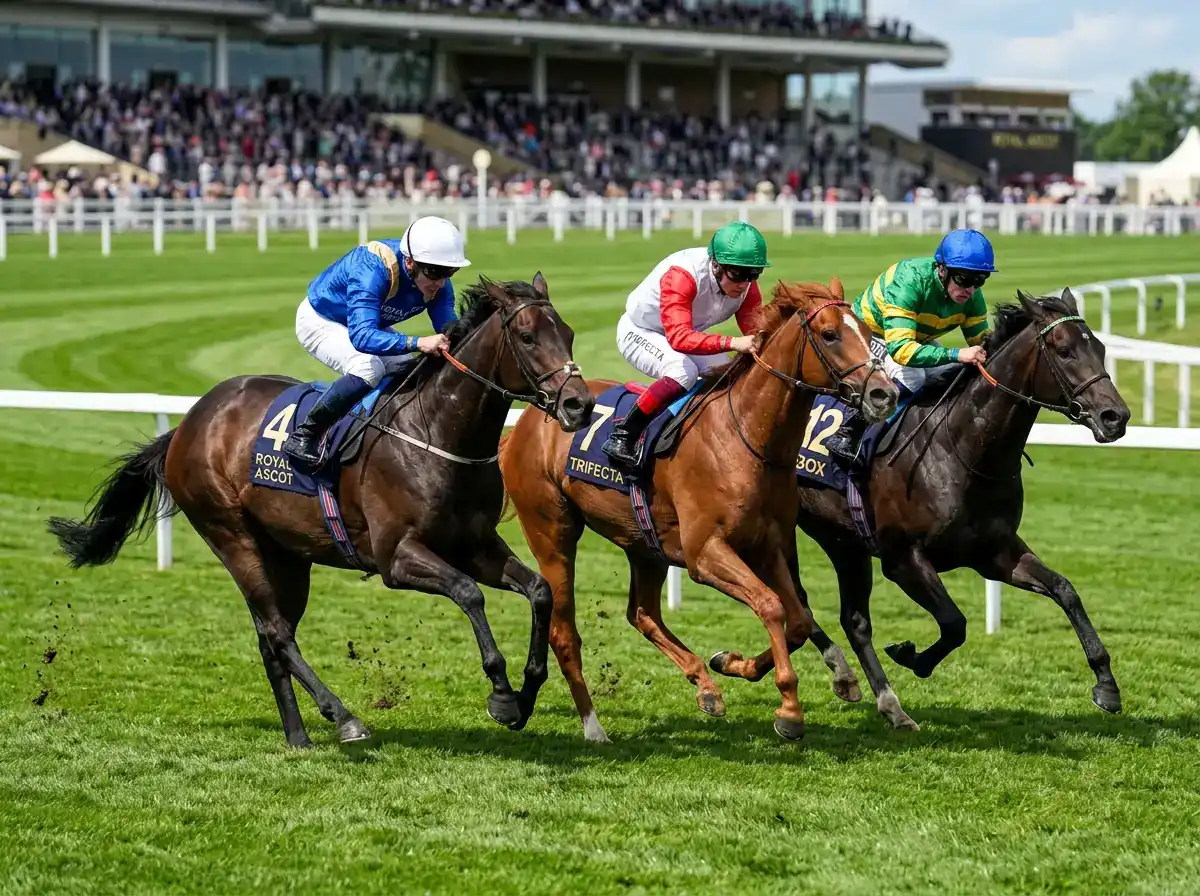
The Royal Ascot 2024 Coventry Stakes produced a Tote Trifecta dividend of £122,667.10 on a £1 unit – the largest UK trifecta dividend on record. The three horses that filled the placings went off at 80/1, 40/1, and 50/1. The same finishing order through a Computer Straight Tricast paid £83,273.26.
That’s a 47% gap in the Tote’s favour, on the same three horses, in the same race, at the same time. The difference between the two products on this single result was £39,393.84 per pound staked. Anyone who’d backed the trifecta through the fixed-odds product had the right horses, the right outcome, and still walked away with significantly less money than the pool punter did. This is the article about why.
The Coventry 2024 setup – going, market and the longshot trio
The Coventry Stakes is a Group 2 over six furlongs for two-year-old colts and geldings on the second day of Royal Ascot. The 2024 running drew a typical field for the race – competitive but with a recognisable top of the market in the morning books. The favourite was a short-priced colt with strong trial form. The expected outcome, from any glance at the racecard, was a 5/2 to 6/1 horse in front with a couple of similarly priced contenders behind.
The actual result threw out the entire shape of the market. The 80/1 winner had run twice in low-grade maidens and was carried by a market that simply hadn’t reckoned with the form. The 40/1 second came from a stable having a difficult meeting. The 50/1 third had drifted in the morning and started even longer in places. Three horses the public had collectively dismissed, finishing in the only order none of the morning lines had priced up.
That structural setup – a result the public actively bet against – is the precondition for a dividend like £122,667. The pool fills with money on the favourites and on the recognised contenders. When the result excludes every popular pick, the winning units are vanishingly few. The post-takeout pool divided among those few units produces the kind of figures that only a parimutuel structure can pay.
Why the CSF Tricast paid 47% less on the same three horses
The Computer Straight Tricast settles via a deterministic SP-derived formula. Every starting price gets fed through an algorithm, and the algorithm returns a dividend. The formula isn’t built for triple-longshot outcomes. It treats short-priced combinations generously because most CST results involve short-priced combinations. When the inputs are 80/1, 40/1 and 50/1, the algorithm produces a number – £83,273.26 in this case – but the number doesn’t scale linearly with the rarity of the result.
The Tote Trifecta has no algorithm. The dividend is whatever the pool can pay. If hundreds of thousands of pounds flowed into the pool and only a handful of units backed the right 1-2-3, the dividend per unit is whatever the arithmetic of pool ÷ takeout ÷ winning units produces. On the Coventry 2024, that arithmetic produced £122,667.10. The Tote+ guarantee – which would have paid the higher of the CSF or the pool – would have delivered the £122,667 result automatically.
Across the broader UK calendar, Tote+ Trifecta beats the equivalent Tricast in 77% of cases, with an average uplift of 50% per bet. The Coventry result wasn’t a freak event in the structural sense – it’s an extreme example of a pattern that runs through hundreds of races a year. The pool’s ability to pay rare results scales with rarity, in a way the fixed-odds algorithm structurally can’t.
For the everyday version of this same dynamic on smaller exotics, the Tote Plus guarantee mechanics determine how the comparison settles automatically for any punter on the matched product.
What the Coventry trio actually means for the typical punter
Most punters reading about £122,667 dividends draw the wrong lesson. They start backing longshot trios in big races, assuming the Coventry was a template. It wasn’t a template – it was a tail-end outcome on a distribution. The vast majority of contested races produce results where the favourite or the second favourite is in the placings, and on those results the CST often outperforms the Trifecta.
The right lesson is product-selection discipline, not bet-selection bravado. When a contested handicap or a competitive Group 2 has the shape that could plausibly produce a result the public misses – a wide field, several genuine contenders priced above 20/1, a weather or going factor that could reshape the form lines – the Tote Trifecta (or better, Tote+) is the structurally correct vehicle. When the race has a clear favourite expected to dominate, the CSF and CST will more often be the better products.
A boxing punter who’d reasoned this through before the 2024 Coventry – looked at the depth of the field, the morning trade on outsiders, the unfamiliarity of the second-tier horses – could have backed a wide perm through the Tote and collected the record dividend. The same punter using the CST as their default product would have collected £83,273 on a £1 stake. Both numbers are life-changing for a single unit, but one is 47% better than the other on the same correct call.
How often can the typical Royal Ascot fan expect this kind of result
The honest answer is: very rarely. Dividends in six figures on a £1 unit are calendar events, not weekly occurrences. Royal Ascot produces one or two outlier results a year, on average – not necessarily in the £122,667 bracket, but in the territory where the Trifecta dividend lands in the tens of thousands. Most of those happen in the 5-furlong sprints for two-year-olds, the longer-distance handicaps, and the consolation Group races where the favourites aren’t always strong enough to dominate.
The Cheltenham Festival produces a different pattern. The contested handicap chases at the Festival regularly produce four-figure Trifecta dividends – the structural setup is closer to a sustained week of upside than to occasional fireworks. Anyone aiming to replicate the Royal Ascot 2024 result mathematically should accept they’re chasing a tail outcome, not a strategy.
What’s replicable is the discipline. Reading field strength carefully. Identifying races where the favourite is structurally vulnerable. Putting box money through the pool rather than through the SP-derived formula when the result is more likely to confound the public. The £122,667 dividend is the most dramatic example on record of why product choice matters at the boxing slip. The lesson scales down to every pound staked.
Was the Coventry Stakes 2024 result the largest UK trifecta dividend in history?
Yes – the £122,667.10 dividend on the Coventry Stakes 2024 stands as the largest UK Tote Trifecta dividend on record at the time of the Royal Ascot meeting. The same 1-2-3 through the CSF Tricast paid £83,273.26, a 47% lower figure on the identical finishing order.
Does Royal Ascot consistently produce big trifecta payouts compared to Cheltenham?
Royal Ascot tends to produce occasional outsized dividends in the £20,000 to £100,000+ range, concentrated in two-year-old races and the longer handicaps. Cheltenham produces a more sustained pattern of four-figure dividends across its contested handicap chases. The structural drivers are different, but both Festivals reward the punter who reads pool dynamics correctly.
Written by the editors at box bet in Horse Racing.